
Tigers Eye
We sell a range of colours of Tigers Eye, including the Blue, Golden, and Red varieties.
Tigers Eye is a chatoyant stone often used as a decorative object – given its colour by varying levels of Iron content, interspersed with tiny Quartz crystals.
Tiger’s eye is found in several places, including South Africa, Australia, Brazil, India, and the United States.
Showing all 17 results
-
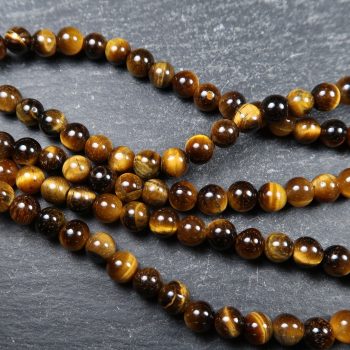
Tigers Eye bead strands (Golden)
Price range: £3.00 through £4.45 -
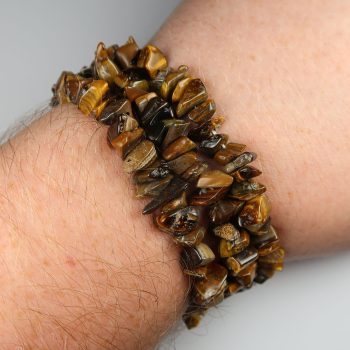

Tigers Eye Bracelets (Golden)
Price range: £1.95 through £4.95 -
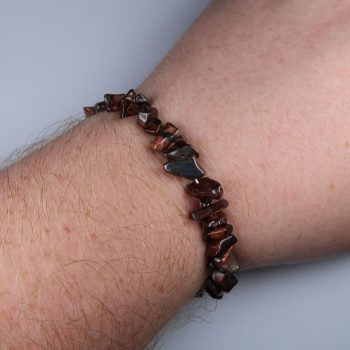
Tigers Eye Bracelets (Red)
£1.95 -

Tigers Eye Cabochons (Golden)
Price range: £1.00 through £6.00 -
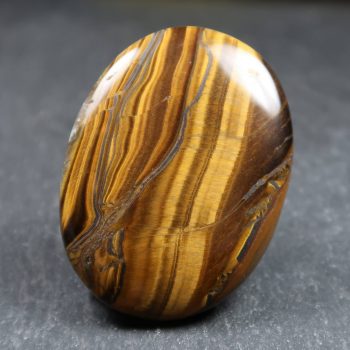
Tigers Eye Cabochons (Golden) (Freeform)
£4.00 -
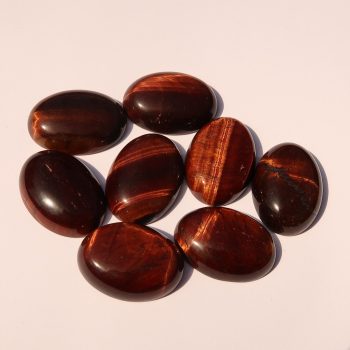
Tigers Eye cabochons (Red)
Price range: £1.50 through £5.00 -
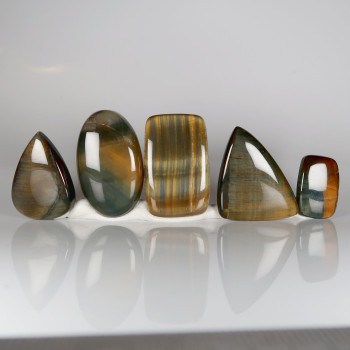
Tigers Eye Cabochons (Variegated)
Price range: £5.00 through £10.00 -
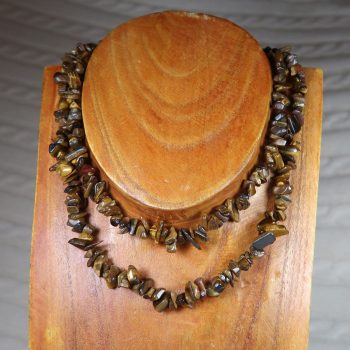
Tigers Eye necklaces (Golden)
Price range: £2.50 through £3.00 -
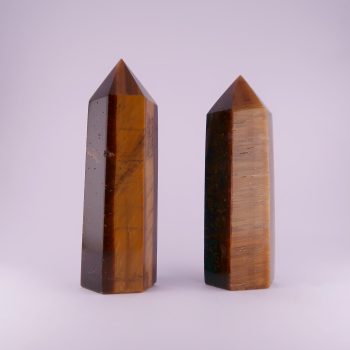
Tigers Eye Obelisks (Golden)
£7.00 -
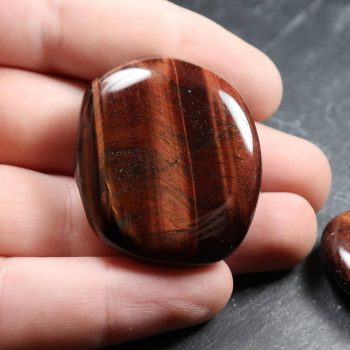
Tigers Eye Palmstones (Red)
Price range: £5.00 through £6.00 -
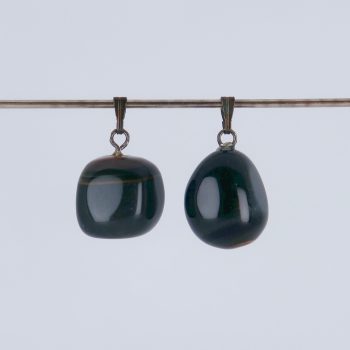
Tigers Eye Pendants (Blue)
£1.20 -
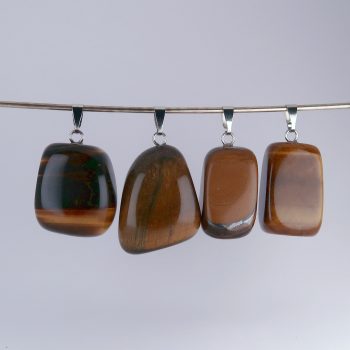
Tigers Eye Pendants (Golden)
Price range: £0.85 through £8.00 -
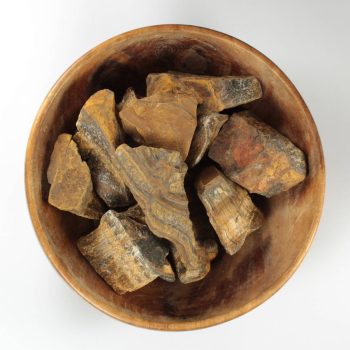
Tigers Eye Specimens / Rough (Golden)
£1.00 -
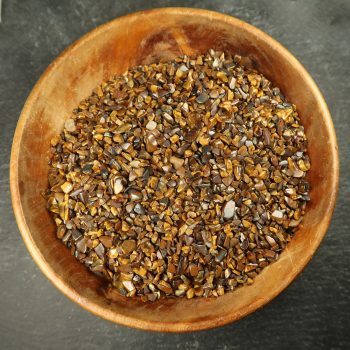
Tigers Eye tumblechips (Golden)
£3.00 -
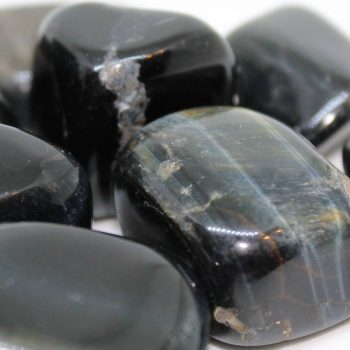
Tigers Eye Tumblestones (Blue)
Price range: £0.85 through £5.00 -
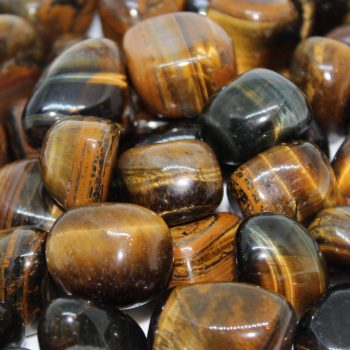
Tigers Eye Tumblestones (Golden)
Price range: £1.25 through £4.00 -
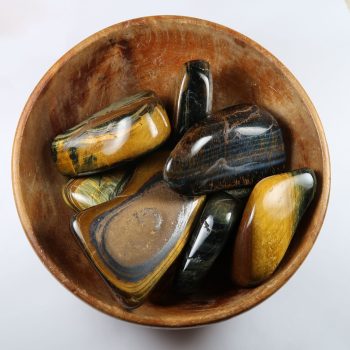
Tigers Eye tumblestones (Mixed)
Price range: £3.95 through £4.95
Information about Tiger’s Eye
Tiger’s eye is one of the most familiar and widely sold gemstones in the world – a golden-brown, silky-lustred variety of quartz whose irresistible rippling sheen catches the eye in virtually every mineral shop, market stall, and gift counter on earth. Its appeal is immediate and requires no geological knowledge to appreciate, and it has been valued as an ornamental material for thousands of years.
Tiger’s eye is a variety of quartz in which the optical effect known as chatoyancy – a shimmering, shifting band of light that rolls across the surface as the stone is tilted, resembling the slit pupil of a cat’s eye – is created by the presence of parallel fibres of crocidolite (blue asbestos) or its iron-oxidised replacement products, pseudomorphed or intergrown with fine-grained quartz.
The fibres reflect light in a single direction, producing the characteristic narrow band of brightness that moves as the viewing angle changes. Most tiger’s eye is golden-brown to yellow-brown, with dark and light alternating bands of silky sheen, giving the impression of depth and movement.
A note on how tiger’s eye actually forms: For well over a century, tiger’s eye was cited in textbooks as the classic example of pseudomorphism – the process by which one mineral is replaced atom by atom by another whilst retaining the original’s shape, so that the crocidolite fibres appeared to have been replaced in place by quartz.
In 2003, however, Heaney and Fisher published a landmark study in the journal Geology demonstrating that this long-accepted explanation is almost certainly wrong. Their research showed that the fibrous texture of tiger’s eye is instead the result of a process called crack-seal vein filling: crocidolite and quartz grew simultaneously in adjacent, opening fractures in banded iron formations, with the two minerals filling cracks as they propagated through the rock side by side rather than one replacing the other. This changes the story of tiger’s eye from one of replacement to one of synchronous growth – a more subtle distinction, but a significant one in terms of how geologists understand the rock’s structure and origin.
Uses and History
In the 19th century, tiger’s eye was genuinely rare and expensive – most material came from a single deposit in South Africa and it was priced comparably to gold in some markets. The opening of large-scale mining operations in the Northern Cape Province of South Africa in the late 19th century transformed it from a luxury material into one of the most affordable and widely available gemstones in the world, a status it has maintained ever since.
Today tiger’s eye is cut into cabochons, tumbled, carved, and fashioned into a vast range of jewellery and decorative objects. Its hardness of 7 makes it durable and suitable for everyday wear. It is also used in knife handles, inlay work, and decorative objects.
A note for buyers: Red tiger’s eye – sometimes sold as “ox eye” or “bull’s eye” – is almost always produced artificially by heating golden tiger’s eye, which oxidises the iron content further and shifts the colour towards red. Naturally red tiger’s eye does exist but is exceedingly rare; almost all red material on the market is heat-treated. Green tiger’s eye is similarly almost always dyed. Blue tiger’s eye (hawk’s eye) is natural and untreated, retaining the original unaltered crocidolite colour; it is genuinely rarer than golden tiger’s eye and should not require treatment to produce its colour. However, it is equally possible some blue tigers eye is dyed or treated.
The principal source worldwide is the Northern Cape Province of South Africa, particularly the area around Prieska, Griquatown, and Kuruman, where tiger’s eye occurs in Precambrian banded iron formations. The Pilbara region of Western Australia, particularly around Mount Brockman, is the other major commercial source, where tiger’s eye also occurs in banded iron formations and is sometimes interlayered with hematite and red jasper to form the striking composite rock known as tiger iron or Marra Mamba – a material popular with lapidaries for its dramatic banded appearance. Namibia produces blue tiger’s eye (hawk’s eye), pietersite, and the rare nellite variety. No significant occurrences are known from the United Kingdom.
Mineralogy
Hazards and Warnings
Tiger’s eye contains crocidolite (blue asbestos) fibres or their alteration products. In polished, tumbled, or otherwise intact specimens the fibres are locked within the quartz matrix and pose no risk in normal handling. Cutting, grinding, or sanding tiger’s eye dry should never be done without appropriate respiratory protection, as this can release fibres. All lapidary work should be done wet.
Mineral collectors should wash their hands after handling specimens as a matter of good practice.
Almost all rocks, minerals (and, frankly, almost all other substances on earth) can produce toxic dust when cutting, which can cause serious respiratory conditions including silicosis. When cutting or polishing rocks, minerals, shells, etc, all work should be done wet to minimise the dust, and a suitable respirator or extraction system should be used.
Translations
Arabic:
- عين النمر
Hindi:
- टाइगर आई
Portuguese:
- Olho de tigre
Bengali:
Indonesian:
- Mata harimau
Punjabi:
English:
- Tiger’s Eye
- Tiger Eye
- Hawk’s Eye (blue variety)
- Ox Eye / Bull’s Eye (red variety)
- Pietersite (brecciated variety)
Italian:
- Occhio di tigre
Russian:
- Тигровый глаз
French:
- Oeil de tigre
Japanese:
- タイガーアイ
Spanish:
- Ojo de tigre
German:
- Tigerauge
Korean:
- 호랑이눈석
Thai:
- ตาเสือ
Gujurati:
Mandarin Chinese:
- 虎眼石
Urdu:
- شیر کی آنکھ