
Dufrenite
Dufrenite is a secondary phosphate mineral which occurs in iron ore deposits. It is more correctly known as Dufrénite but for some reason the accent doesn’t play well on the website title!
Showing all 3 results
-
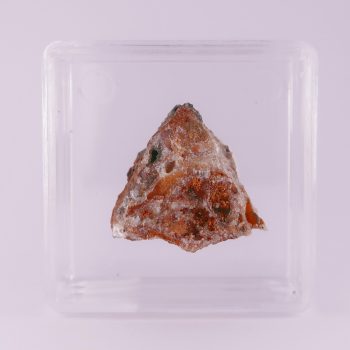
Bariopharmacosiderite and Dufrenite from Ste Barbe vein, France
Price range: £10.00 through £12.50 -
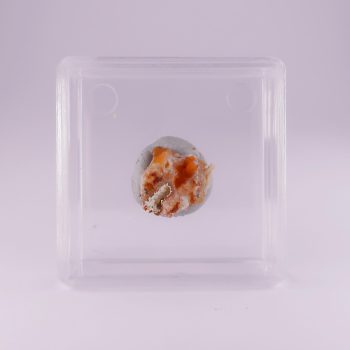

Bariopharmacosiderite, Dufrenite, Kidwellite from Ste Barbe vein, France
£7.50 -
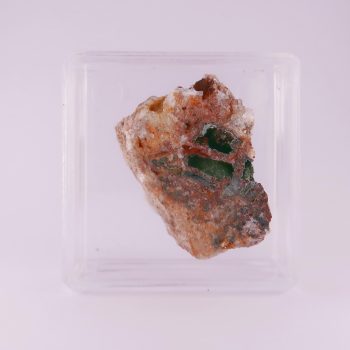
Dufrenite and Kidwellite from Ste Barbe vein, France
£10.00
Information about Dufrenite
Dufrenite is a secondary iron phosphate hydroxide mineral forming in the oxidised and weathered zones of phosphate-bearing iron ore deposits and pegmatites, prized by collectors for its rich dark green to blackish-green botryoidal masses, radiated fibrous aggregates, and occasionally well-formed prismatic crystals.
It belongs to the dufrenite group of iron phosphates. The colour ranges from deep olive-green through dark bottle-green to near-black depending on oxidation state and iron content, with fresh surfaces often showing a brighter green than weathered crusts.
The mineral is named in honour of the French mineralogist Ours Pierre Armand Dufrénoy (1792–1857), Professor of Mineralogy at the École des Mines in Paris.
Uses and History
Dufrenite was first described in 1833 by Alexandre Brongniart, who named it for Dufrénoy. Ours Pierre Armand Dufrénoy was one of the foremost French mineralogists and geologists of the nineteenth century; alongside Élie de Beaumont he produced the Carte géologique de la France, a landmark in the history of geological mapping, and he authored an influential four-volume treatise on mineralogy. He was also instrumental in introducing Haüy’s crystallographic ideas to a wider French scientific audience.
Dufrenite has no commercial applications and is collected purely as a specimen mineral. It belongs to a group of secondary iron phosphates — including rockbridgeite, frondelite, and beraunite — that form characteristic dark green to brown crystalline coatings in the oxidised zones of phosphate-rich iron deposits, and the group members can be difficult to distinguish without chemical analysis.
Mineralogy
Hazards and Warnings
No specific hazards beyond standard mineral handling precautions. Wash hands after handling.
Almost all rocks, minerals (and, frankly, almost all other substances on earth) can produce toxic dust when cutting, which can cause serious respiratory conditions including silicosis. When cutting or polishing rocks, minerals, shells, etc, all work should be done wet to minimise the dust, and a suitable respirator or extraction system should be used.
Translations
Arabic:
Hindi:
Portuguese:
- Dufrenita
Bengali:
Indonesian:
Punjabi:
English:
- Dufrenite
Italian:
- Dufrenite
Russian:
- Дюфренит
French:
- Dufrénite
Japanese:
- デュフレナイト
Spanish:
- Dufrenita
German:
- Dufrenith
Korean:
Thai:
Gujurati:
Mandarin Chinese:
- 杜弗雷尼石
Urdu: