
Carminite
A rare arsenate mineral with a bright red colouration, and which takes its name from its colour – ‘carmine red’.
Can form extremely detailed, sharp crystals with a bright red colour – unfortunately, they are rather small and will primarily be of interest to micromineral collectors.
Toxic mineral: contains lead, arsenic.
Showing all 5 results
-
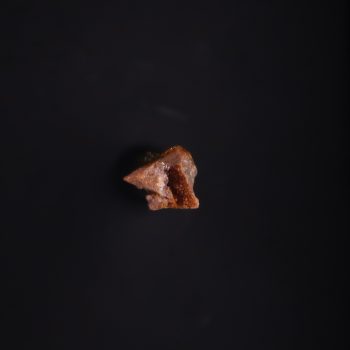
Carminite and Beudantite from Brandy Gill Mine, Cumbria
£5.00 -
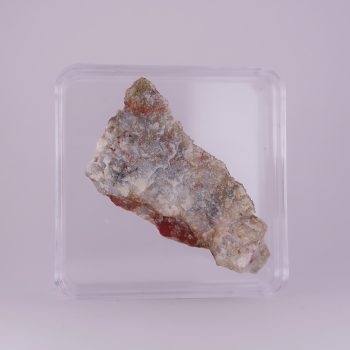

Carminite from Deer Hills, Cumbria
Price range: £5.00 through £20.00 -
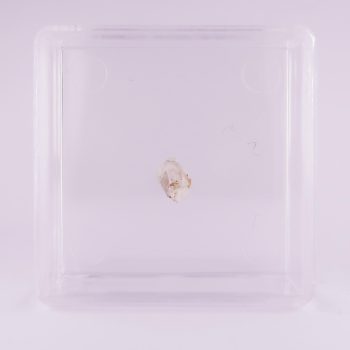
Carminite from La Verrière, France
£3.50 -

Carminite from Ste Barbe vein, France
£5.00 -
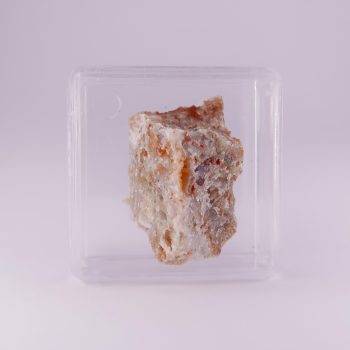
Scorodite and Carminite from Ste Barbe vein, France
£10.00
Information about Carminite
Carminite is a rare secondary lead iron arsenate hydroxide mineral, and one that earns its place on any wishlist of secondary arsenate minerals for the sheer vividness of its colour: deep carmine-red to brick-red acicular crystals with a silky lustre, forming dense radiated tufts and elongated sprays on arsenate-bearing gossan, are among the most intensely coloured of all secondary minerals.
The colour – which gives the mineral its name directly – is rare in the mineral kingdom and shared only by a handful of species.
It forms acicular to prismatic crystals, typically very elongate and hair-like, in radiated fibrous groups and silky tufts, deep carmine-red to dark red or brick-red, occasionally pale red or pinkish. The lustre is silky to vitreous.
It forms in the oxidised zones of lead-arsenic bearing hydrothermal ore deposits, where circulating oxidising groundwater breaks down arsenopyrite and galena to release arsenate and lead simultaneously.
Uses and History
Carminite has no industrial or gemological applications. It is collected as a mineral specimen for its striking colour.
The mineral was first described from the Louise Mine, Germany.
The finest collector specimens come from the Tsumeb Mine in the Otjozondjupa Region of Namibia, which has produced the largest and most vibrantly coloured carminite crystals known, some reaching several millimetres in length, on gossan and smithsonite matrix.
Additional localities include Broken Hill in New South Wales, Australia; the Clara Mine at Oberwolfach in Baden-Württemberg; and the Ojuela Mine at Mapimí in Durango, Mexico.
There are several locales around the UK, primarily in Cornwall and Cumbria, although they primarily produce micro crystals.
Mineralogy
Hazards and Warnings
Highly toxic mineral: contains lead and arsenic. Both lead and arsenic compounds are seriously toxic. Mineral collectors must wash their hands thoroughly after handling, must not inhale any dust, and must keep specimens away from children. Do not use any carminite specimen near food or drink.
Almost all rocks, minerals (and, frankly, almost all other substances on earth) can produce toxic dust when cutting, which can cause serious respiratory conditions including silicosis. When cutting or polishing rocks, minerals, shells, etc, all work should be done wet to minimise the dust, and a suitable respirator or extraction system should be used.
Translations
Arabic:
Hindi:
Portuguese:
- Carminita
Bengali:
Indonesian:
Punjabi:
English:
- Carminite
Italian:
- Carminite
Russian:
- Карминит
French:
- Carminite
Japanese:
- カルミナイト
Spanish:
- Carminita
German:
- Karminit
Korean:
Thai:
Gujurati:
Mandarin Chinese:
Urdu: