
Silver
Silver is a soft, malleable, and ductile metal that has always been highly valued for its beauty and its usefulness in various applications, including currency, jewellery, silverware, and electronics.
It occurs both as silver ores and as a native metal.
Showing all 2 results
-
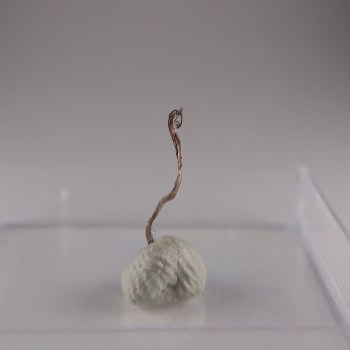
Native Silver wires from Freiberg, Germany
Price range: £5.00 through £7.50 -
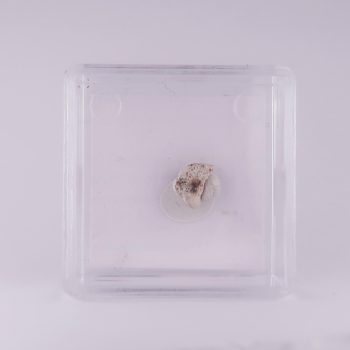

Spessartine Garnet and Silver in Kaolinite from Broken Hill South Mine, Australia
£7.50
Information about Silver (Native and Secondary)
Native silver is one of the most celebrated of all collector minerals, forming wire, dendritic, and massive forms with a bright silver-white metallic lustre that on the finest specimens is entirely unlike anything else in mineralogy.
It is one of the seven metals known and used since antiquity, and the history of silver mining is inseparable from the economic and political history of Europe, the Americas, and the ancient world. Secondary silver minerals – the compounds formed when native silver or silver sulphide ores are oxidised and chemically altered near the surface – extend the collector interest further, adding colour and variety to a group already rich in remarkable specimens.
Native silver typically occurs as distorted, branching, wire-like, or hair-like crystal aggregates, often intergrown and tangled. Flat, tabular, or platy crystals are less common. The surfaces of fresh specimens are bright silver-white; on exposure to air and humidity the metal tarnishes rapidly through yellow and brown to grey, dark grey, and ultimately iridescent black via a thin layer of silver sulphide. This tarnish is familiar from silverware and jewellery.
It forms in hydrothermal silver-bearing veins, typically associated with acanthite (silver sulphide), proustite, pyrargyrite, native arsenic, calcite, quartz, and barite; in the supergene enrichment zones of silver-bearing base metal deposits; and rarely as a primary magmatic mineral.
Silver is isometric and normally crystallises in the cubic system, though many natural silver specimens show highly distorted forms resulting from rapid growth – wires, nets, masses of tangled filaments, and coin-like flat plates rather than orthodox cubes or octahedra. Silver is both malleable and ductile to a remarkable degree: it can be hammered flat without crumbling, and drawn into wire without breaking.
Uses and History
Silver has been worked by humans for at least six thousand years, with the oldest known silver smelting operations dated to around 3000 BC at sites in Turkey and the Aegean. The metal’s combination of high reflectivity, malleability, ductility, biocidal properties, and relative accessibility made it a material of universal importance – used for coinage, jewellery, sacred objects, mirrors, tableware, and medicine across virtually every literate civilisation.
The word silver gives its name to one of the oldest noble metals, and was the basis of monetary systems from ancient Greece through to the twentieth century. The root of the chemical symbol Ag is the Latin argentum, which is cognate with the French argent (silver/money) and the country name Argentina – named by Spanish colonisers for the silver they expected to find there.
The great silver mining regions of the world – the Kongsberg mines of Norway, Freiberg in Saxony, the Comstock Lode in Nevada, the Cerro Rico at Potosí in Bolivia, and Cobalt in Ontario – defined economic and political history for centuries. The Cerro Rico alone, worked from 1545 onwards, is estimated to have produced the equivalent of tens of thousands of tonnes of silver; its mines were worked under conditions of forced labour that killed hundreds of thousands of indigenous and enslaved workers, and the silver extracted from them funded Spanish imperial power for two centuries.
Today silver remains industrially essential – it has the highest electrical conductivity of any element and is used in photovoltaic solar panels (the largest single category of demand), electrical contacts, mirrors, photography (now largely displaced by digital), medical coatings, and water purification. Demand for silver in solar panel manufacture has driven a significant increase in primary mining activity.
The finest native silver specimens for collectors come from Kongsberg in Buskerud, Norway, which has produced wire and arborescent silver of extraordinary quality now displayed in museums worldwide; Freiberg in Saxony, Germany; Jáchymov (Joachimsthal) in Bohemia, Czech Republic; and Cobalt, Ontario, Canada, where spectacular sheet and wire silver specimens were found in the early twentieth century.
In Wales, native silver is recorded from Dolgellau in Gwynedd – the Dolgellau Gold Belt, one of the most important gold deposits in Britain, also produces native silver in its quartz veins – as well as from the Central Wales Orefield. The Museum of Wales holds specimens from Welsh silver localities. Cornwall is also noted for secondary silver minerals from its polymetallic vein deposits.
Mineralogy
Hazards and Warnings
No specific health risks are formally recorded for native silver. Some secondary silver minerals, particularly those containing arsenic (proustite) or antimony (pyrargyrite, stephanite), should be handled with care and hands washed after handling. Cerargyrite is light-sensitive and should be stored away from prolonged light exposure to avoid darkening.
Almost all rocks, minerals (and, frankly, almost all other substances on earth) can produce toxic dust when cutting, which can cause serious respiratory conditions including silicosis. When cutting or polishing rocks, minerals, shells, etc, all work should be done wet to minimise the dust, and a suitable respirator or extraction system should be used.
Translations
Arabic:
- فضة طبيعية
Hindi:
- प्राकृतिक चांदी
Portuguese:
- Prata nativa
Bengali:
Indonesian:
- Perak alam
Punjabi:
English:
- Native Silver
- Silver
Italian:
- Argento nativo
Russian:
- Серебро самородное
French:
- Argent natif
Japanese:
- 自然銀
Spanish:
- Plata nativa
German:
- Silber
Korean:
- 은
Thai:
Gujurati:
Mandarin Chinese:
- 原生银
Urdu: