
Selenite
Selenite is a crystalline form of the mineral gypsum (hydrated calcium sulfate). It is typically colorless and transparent, although it can also appear in shades of white, grey, and brown.
The related mineral known as satin spar is also a form of gypsum, but there are differences.
Showing all 5 results
-
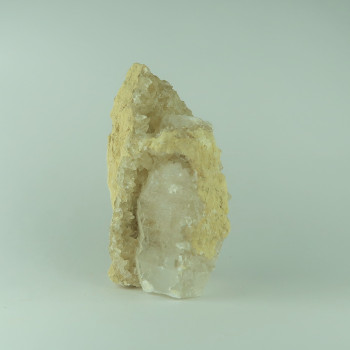
Calcite and Selenite specimens from Jebel Saghro, Morocco
£10.00 -
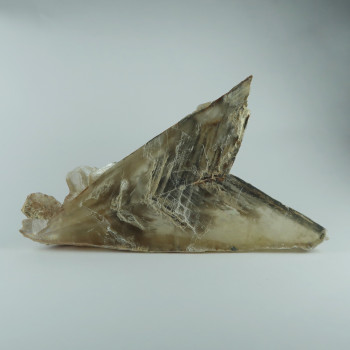

Selenite from Castrillo del Val, Spain
Price range: £20.00 through £25.00 -
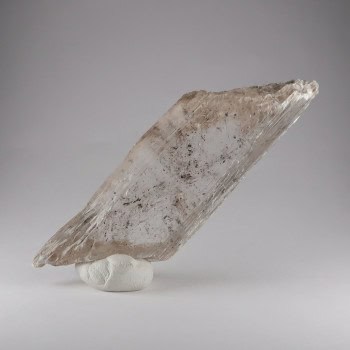
Selenite from La Tejera ravine, Spain
Price range: £7.50 through £10.00 - Sale!
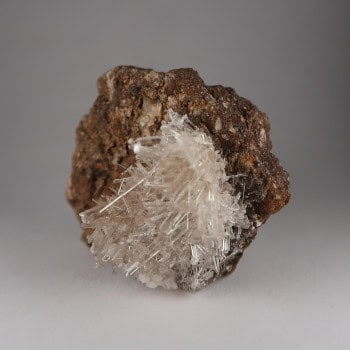
Selenite from San Timoteo Mine, Spain
Original price was: £20.00.£15.00Current price is: £15.00. -
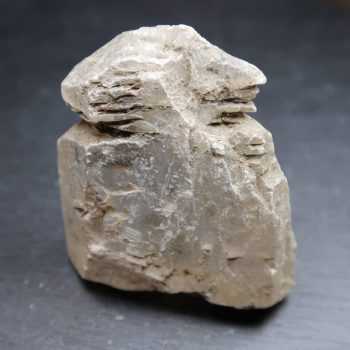
Selenite Specimens from the UK
Price range: £0.60 through £3.00
Information about Selenite
Selenite is the name given to the clear, colourless to pale yellowish, transparent variety of gypsum – itself one of the most abundant and widely distributed minerals on earth, but in its selenite form capable of producing crystals of extraordinary size and clarity that rank among the most spectacular natural objects ever discovered.
The name selenite derives from the Greek selene (the Moon), a reference to the pearly, moonlight-like reflections seen in cleavage surfaces of the mineral – entirely different from the element selenium, whose name shares the same Greek root but is otherwise unrelated.
Gypsum as a mineral is hydrated calcium sulphate (CaSO4·2H2O), and selenite specifically refers to the transparent, well-crystallised variety. It typically forms flat, tabular to platy crystals with a perfect basal cleavage that produces extraordinarily smooth, lustrous cleavage surfaces, and a distinctive pearly to vitreous lustre.
It is very soft – just 2.0 on the Mohs scale, easily scratched by a fingernail – and distinctively flexible in thin sheets without being elastic (it will bend but not spring back). Twin crystals – swallow-tail twins, spear-head twins, and fishtail twins – are among the most characteristic and beautiful forms.
The Naica Mine in Chihuahua, Mexico contains what is arguably the world’s most dramatic natural crystal display: the Cave of Crystals (Cueva de los Cristales), discovered in 2000, where selenite crystals up to 11 metres long and weighing up to 55 tonnes grew over hundreds of thousands of years from hydrothermal waters held at approximately 58°C. These are the largest natural crystals of any mineral ever found.
Other varieties of gypsum include alabaster (fine-grained massive gypsum used for carving), satin spar (fibrous variety with a silky lustre), and desert rose (rosette-shaped clusters incorporating sand grains, found in arid soils).
Uses and History
Gypsum has been used by humans for thousands of years. Calcined gypsum (plaster of Paris) – made by heating gypsum to drive off the water of crystallisation – has been used as a building material, plaster, and adhesive since at least the third millennium BC; ancient Egyptian buildings incorporate gypsum plaster dating to 3700 BC. The name plaster of Paris derives from the extensive gypsum deposits beneath the Paris Basin, which supplied the European plaster trade for centuries.
Modern gypsum is one of the most widely used industrial minerals in the world, consumed principally as wallboard (drywall or plasterboard) in construction, as a soil amendment in agriculture (it supplies calcium and sulphur without changing soil pH), as a setting retarder in Portland cement, and as a component of fertilisers. Global gypsum production is measured in hundreds of millions of tonnes annually, making it one of the handful of minerals produced at truly planetary scale. Synthetic gypsum from power station flue-gas desulphurisation now supplements mined production significantly.
The decorative and collector appeal of selenite lies in its transparency, its perfect cleavage, and the theatrical scale of the finest crystals. Cleavage plates of selenite have historically been used as a substitute for glass (muscovite mica was similarly used, and both minerals are still called window stone or Russian glass in various languages).
Specimens of selenite from the Warden Point on the Isle of Sheppey are probably the best known UK specimens, but the mineral is found in a range of other sites around the country, especially in a great number of brick pits and coastal sites.
Mineralogy
Hazards and Warnings
No specific health risks are associated with selenite or gypsum under normal handling conditions. The name can cause confusion with the element selenium, which is toxic, but selenite contains no selenium.
Almost all rocks, minerals (and, frankly, almost all other substances on earth) can produce toxic dust when cutting, which can cause serious respiratory conditions including silicosis. When cutting or polishing rocks, minerals, shells, etc, all work should be done wet to minimise the dust, and a suitable respirator or extraction system should be used.
Translations
Arabic:
- سيلينيت
Hindi:
- सेलेनाइट
Portuguese:
- Selenita
Bengali:
Indonesian:
- Selenit
Punjabi:
English:
- Selenite
- Gypsum (transparent variety)
Italian:
- Selenite
Russian:
- Селенит
French:
- Sélénite
Japanese:
- セレナイト
Spanish:
- Selenita
German:
- Marienglas / Selenit
Korean:
- 셀레나이트
Thai:
Gujurati:
Mandarin Chinese:
- 透石膏
Urdu: