
Cyrilovite
Cyrilovite is a rare iron phosphate mineral typically of interest to micromineral collectors – it forms fine yellow to orange-brown crystals.
Showing the single result
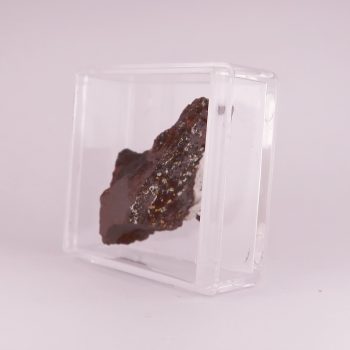
Information about Cyrilovite
Cyrilovite is a rare hydrated sodium iron phosphate hydroxide mineral forming in the oxidised and altered zones of complex granitic pegmatites rich in phosphate minerals, typically as a secondary alteration product of primary iron-bearing phosphates such as triphylite and lithiophilite.
It forms small bright orange-yellow to golden-yellow or reddish-orange tetragonal crystals – dipyramidal or prismatic – with a vitreous to resinous lustre, and the warm orange colour is among the more distinctive and attractive features of this otherwise minor phosphate species.
It belongs to the wardite group of hydrated phosphate minerals, which also includes wardite, millisite, and fluorwardite, all sharing the same layered open-framework phosphate structure.
The type locality is the Cyrilov phosphate pegmatite near Bory in the Czech Republic, from which it takes its name. The finest collecting specimens, however, come from the Hagendorf-Süd pegmatite in Bavaria, Germany, where cyrilovite forms bright orange dipyramidal crystals associated with strengite, rockbridgeite, and other iron phosphates.
Additional occurrences include the Greifenstein pegmatite in Ehrenfriedersdorf, Saxony, and pegmatite localities in Brazil and the United States.
The best British locale I know of is the Gunheath China Clay Pit in Cornwall, which produces Cyrilovite in various forms, predominantly ‘ball-like’ aggregates.
Uses and History
The Hagendorf-Süd pegmatite, which provides the most desirable cyrilovite specimens, is one of the world’s most thoroughly studied phosphate pegmatites and has yielded an exceptional diversity of secondary phosphate species as its primary triphylite-lithiophilite core has weathered and altered under oxidising conditions over geological time.
The orange cyrilovite crystals from Hagendorf are small but sharply formed and make attractive micromount and thumbnail specimens.
The mineral has no commercial applications, but is collected as an attractive minor phosphate species, particularly for the warm orange colour and the Hagendorf association.
Mineralogy
Hazards and Warnings
No specific hazards. Wash hands after handling as good practice.
Almost all rocks, minerals (and, frankly, almost all other substances on earth) can produce toxic dust when cutting, which can cause serious respiratory conditions including silicosis. When cutting or polishing rocks, minerals, shells, etc, all work should be done wet to minimise the dust, and a suitable respirator or extraction system should be used.
Translations
Arabic:
Hindi:
Portuguese:
- Ciriliovita
Bengali:
Indonesian:
Punjabi:
English:
- Cyrilovite
Italian:
- Cirilovite
Russian:
- Кириловит
French:
- Cyrilovite
Japanese:
Spanish:
- Ciriliovita
German:
- Cyrilovit
Korean:
Thai:
Gujurati:
Mandarin Chinese:
Urdu: