
Catapleiite
Catapleiite is an uncommon zirconium bearing mineral, particularly of interest to micro mineral and systematic mineral collectors.
Showing the single result
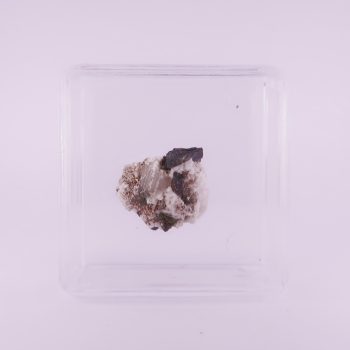
Information about Catapleiite
Catapleiite is a rare sodium zirconium silicate mineral and a characteristic species of the alkaline igneous rock environments – nepheline syenites, agpaitic pegmatites, and related alkaline intrusive complexes – where zirconium, sodium, and silicate combine in crystallochemical environments unavailable in ordinary granites.
It is a minor but recurrent species at the great alkaline complex localities of the world, typically forming small, colourless to pale yellow or pale brown hexagonal plates with a vitreous lustre, easily overlooked but quite beautiful in good specimens.
It forms tabular to platy crystals, often with a distinctly hexagonal outline and well-developed basal faces, typically colourless to pale yellow, pale grey, or pale yellowish-brown, with a vitreous to resinous lustre and transparent to translucent quality.
Crystals are usually only a few millimetres but occasionally reach centimetre scale. Catapleiite is a dimorph of gaidonnayite (which has the same formula and is triclinic), and the sodium-dominant member of a series with calciocatapleiite (the calcium-dominant analogue).
Uses and History
Catapleiite has no industrial or gemological applications. It is collected as a scientific specimen and as part of the alkaline pegmatite mineral suite.
The mineral was first described in 1850 from specimens at Låven Island in the Langesundsfjord district of Telemark, Norway, one of the classic European alkaline igneous localities.
The best collector specimens come from Mont Saint-Hilaire in Quebec, Canada, where catapleiite occurs in the extraordinary alkaline intrusive complex alongside hundreds of other rare species; the Khibiny and Lovozero massifs on the Kola Peninsula, Russia; the Ilímaussaq complex at Narsarsuaq in Greenland; and the type locality in the Langesundsfjord district, Norway.
Mineralogy
Hazards and Warnings
No specific health risks have been formally recorded for catapleiite. Mineral collectors should wash their hands after handling specimens as a matter of good practice.
Almost all rocks, minerals (and, frankly, almost all other substances on earth) can produce toxic dust when cutting, which can cause serious respiratory conditions including silicosis. When cutting or polishing rocks, minerals, shells, etc, all work should be done wet to minimise the dust, and a suitable respirator or extraction system should be used.
Translations
Arabic:
Hindi:
Portuguese:
- Catapleiita
Bengali:
Indonesian:
Punjabi:
English:
- Catapleiite
Italian:
- Catapleiite
Russian:
- Катаплеит
French:
- Catapléïte
Japanese:
- カタプレイト
Spanish:
- Catapleiita
German:
- Katapleit
Korean:
Thai:
Gujurati:
Mandarin Chinese:
Urdu: