
Cacoxenite
Cacoxenite is an iron aluminium phosphate mineral which grows into bright, acicular or radial crystals.
It is typically of interest to micromineral collectors.
Showing all 3 results
-
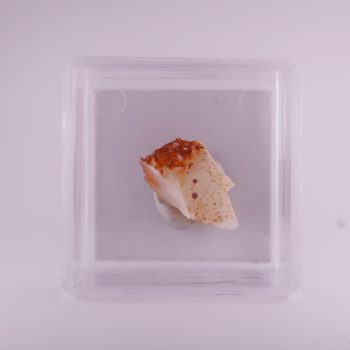
Cacoxenite from Clara Mine, Germany
£10.00 -
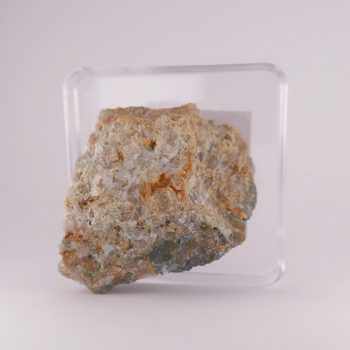

Cacoxenite from Gunheath China Clay Pit, Cornwall
£50.00 -
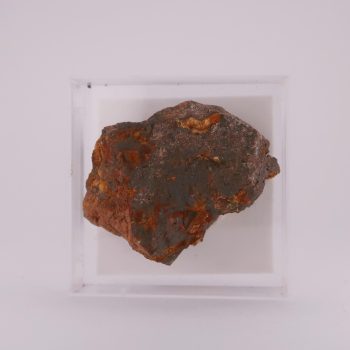
Cacoxenite from Wheal Phoenix, Cornwall
Price range: £3.50 through £15.00
Information about Cacoxenite
Cacoxenite is a hydrated iron aluminium phosphate mineral best known to collectors for occurring in phosphate-rich iron ore deposits, where it forms tufted, radiated fibre bundles of rich golden to orange-yellow on limonite and other iron hydroxides.
There is, as far as I’m aware, no evidence of cacoxenite occurring as an inclusion in quartz, despite what new age sellers claim – the material included in ‘super 7’ and other included Amethysts is typically Goethite.
Cacoxenite forms tufted to radiated groups of fine golden-yellow to orange-yellow fibres with a silky lustre, aggregated into spherulitic or radiated masses that resemble small sunburst flowers on limonite matrix.
The colour is one of the most vivid golds in mineralogy.
The name derives from the Greek kakos (bad) and xenos (stranger) – a reference to its discovery in iron ore at a time when phosphate was an unwanted impurity that degraded iron quality in the smelter; the phosphate content of cacoxenite was considered a nuisance that made the ore commercially less valuable.
Uses and History
Cacoxenite has no industrial applications. It is collected as a mineral specimen, typically by micromount mineral collectors.
The mineral was first described in 1825 from specimens at Hrbek near Brdy in Bohemia, Czech Republic – its type locality. The naming as kakoxen reflected the legitimate metallurgical concern: phosphate in iron ore caused brittleness in the smelted iron, and any phosphate mineral in iron ore was indeed a “bad stranger” from the smelter’s perspective.
The finest standalone cacoxenite specimens come from the Eisenzeche and Eiserner Mann mines near Waldgirmes in the Lahn-Dill district of Hesse, Germany; the Rotläufchen Mine at Siegen, Westphalia, Germany; and the Hellertown area of Pennsylvania, USA.
Cacoxenite is known from iron-ore and phosphate-bearing veins in Devon and Cornwall, England, where it has been noted in several gossan occurrences.
Mineralogy
Hazards and Warnings
No specific health risks have been formally recorded for cacoxenite. Mineral collectors should wash their hands after handling specimens as a matter of good practice.
Almost all rocks, minerals (and, frankly, almost all other substances on earth) can produce toxic dust when cutting, which can cause serious respiratory conditions including silicosis. When cutting or polishing rocks, minerals, shells, etc, all work should be done wet to minimise the dust, and a suitable respirator or extraction system should be used.
Translations
Arabic:
Hindi:
Portuguese:
- Cacoxenita
Bengali:
Indonesian:
Punjabi:
English:
- Cacoxenite
Italian:
- Cacossenite
Russian:
- Какоксен
French:
- Cacoxénite
Japanese:
- カコクセナイト
Spanish:
- Cacoxenita
German:
- Kakoxen
Korean:
Thai:
Gujurati:
Mandarin Chinese:
- 褐磷铁矿
Urdu: