
Alumohydrocalcite
Alumohydrocalcite is an uncommon calcium aluminium carbonate mineral.
This is one I suspect will only be of interest to micro mineral or systematic mineral collectors!
Showing the single result
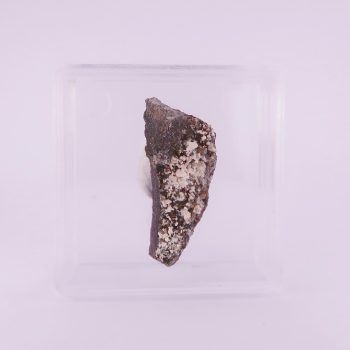
Information about Alumohydrocalcite
Alumohydrocalcite typically forms as fibrous or acicular crystals, often arranged in rounded, pom-pom-like tufts or powdery crusts. It is typically chalky white to pale blue, pale yellow, or grey, though chromium-bearing specimens can range from pale pink to dark violet. It has a silky to dull lustre.
It forms as a secondary mineral – that is, it develops through the weathering and alteration of other pre-existing minerals – most commonly in basaltic volcanic rocks and in association with the clay mineral allophane.
It is related to para-alumohydrocalcite, which shares a very similar chemistry but a different crystal structure, and is also the aluminium equivalent of the rarer mineral grguricite.
Its name reflects its chemistry directly: alumo- for aluminium, hydro- for its water content, and -calcite for its calcium carbonate component.
Uses and History
Alumohydrocalcite has no industrial or gemological applications and is far too soft and delicate for use in jewellery. It is collected primarily for its unusual and attractive rounded, fibrous habit.
The mineral was first described in 1926 by the Russian mineralogist G. Bilibine, from specimens collected in Khakassia, Russia – its type locality, in southern Siberia.
It is a fairly widespread mineral globally, but rarely occurs in quantities sufficient to produce showy specimens.
Notable occurrences include the Graulay basalt quarry in the Eifel region of Germany, where it forms in cavities within volcanic rock; Visé in Belgium; Mas Dieu and Valcroze in the Gard region of France, where it forms pretty white pom-poms; and Mount Hamilton in California, USA. It has been recorded at a number of localities in the United Kingdom.
Mineralogy
Typically chalky white to pale blue, pale yellow, cream, or grey. Chromium-bearing specimens may be pale pink to dark violet.
Hazards and Warnings
Mineral collectors should wash their hands after handling specimens, to avoid any exposure to potential toxins.
Almost all rocks, minerals (and, frankly, almost all other substances on earth) can produce toxic dust when cutting, which can cause serious respiratory conditions including silicosis. When cutting or polishing rocks, minerals, shells, etc, all work should be done wet to minimise the dust, and a suitable respirator or extraction system should be used.
Translations
Arabic:
Hindi:
Portuguese:
Bengali:
Indonesian:
Punjabi:
English:
Italian:
Russian:
French:
Japanese:
- アルモハイドロカルサイト
Spanish:
- Alumohydrocalcit
German:
- Alumohydrocalcit
Korean:
Thai:
Gujurati:
Mandarin Chinese:
Urdu: