
Aeschynite
Aeschynite is a group of rare earth minerals with members being named on their rare earth content – for example, Aeschynite-(Ce), Aeschynite-(Nd), Aeschynite-(Y), etc.
The mineral is primarily of interest to micromount and systematic mineral collectors.
Showing the single result
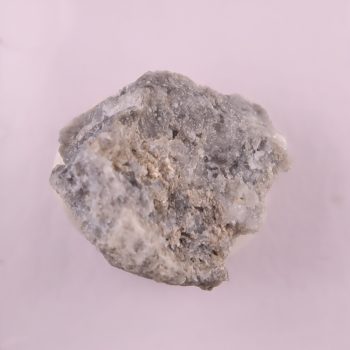
Information about Aeschynite
Aeschynite typically forms as striated, prismatic to tabular crystals and is most commonly black to yellowish-brown in colour, with a submetallic to resinous lustre.
The group includes three recognised species – aeschynite-(Ce), aeschynite-(Nd), and aeschynite-(Y) – named according to which rare earth element is dominant in their composition. The suffix simply indicates the most abundant element present, so aeschynite-(Y) contains yttrium, aeschynite-(Ce) contains cerium, and so on.
Specimens are often at least mildly radioactive, due to the fairly common presence of thorium within the mineral’s structure. The level varies considerably between specimens and localities.
It belongs to the aeschynite group, which also includes nioboaeschynite-(Ce), nioboaeschynite-(Y), and tantalaeschynite-(Y).
Uses and History
Aeschynite has no widespread industrial applications, though it has been considered as a potential source of thorium, niobium, tantalum, and rare earth elements. It is primarily of interest to mineral collectors and researchers.
The mineral was first described in 1828 by the Swedish chemist Jöns Jacob Berzelius. Its unusual name comes from the Greek word aeschyne, meaning “shame” – a reference to the frustration early chemists experienced when attempting to separate all of its constituent elements, which at the time proved extremely difficult.
Well-known localities include the nepheline syenites of the Ural Mountains in Russia, the alkaline massifs of southern Norway near Arendal – where aeschynite-(Y) crystals can exceed 10 cm in length – and several sites across the Alps in France and Switzerland. It has also been recorded in Snowdonia, Wales, though the Welsh material occurs only as microscopic grains.
Mineralogy
Typically black to yellowish-brown; occasionally reddish-brown.
Depends on composition.
- Aeschynite-(Ce): dark brown to black.
- Aeschynite-(Nd): light yellow brown to brown.
- Aeschynite-(Y): reddish yellow to yellowy brown.
- Aeschynite-(Ce): 5.19
- Aeschynite-(Nd): 4.6 – 5.04
- Aeschynite-(Y): 4.82 – 4.93
Hazards and Warnings
Aeschynite is often mildly to moderately radioactive due to the presence of thorium and, less commonly, uranium. Collectors should store specimens appropriately and limit prolonged close contact.
Mineral collectors should wash their hands after handling specimens, to avoid any exposure to potential toxins.
Almost all rocks, minerals (and, frankly, almost all other substances on earth) can produce toxic dust when cutting, which can cause serious respiratory conditions including silicosis.
When cutting or polishing rocks, minerals, shells, etc, all work should be done wet to minimise the dust, and a suitable respirator or extraction system should be used.
Translations
Arabic:
Hindi:
Portuguese:
Bengali:
Indonesian:
Punjabi:
English:
Italian:
Russian:
French:
Japanese:
Spanish:
- Aeschynit
German:
- Aeschynit
Korean:
Thai:
Gujurati:
Mandarin Chinese:
- 易解石
Urdu: