
Aosta Valley
Italy
The Aosta Valley (Regione Autonoma Valle d’Aosta) is a mountainous autonomous region in the north-west of Italy.
Showing the single result
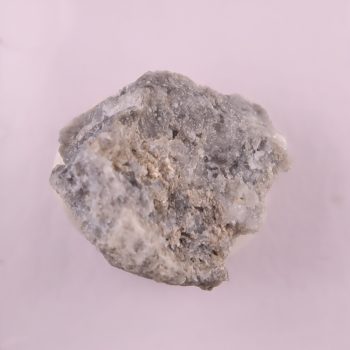
The Aosta Valley is best known mineralogically for its alpine-type fissure and hydrothermal mineralisation associated with the Western Alps.
The region has produced fine specimens of quartz, smoky quartz, adularia, chlorite, epidote, anatase, rutile, titanite, garnet, fluorite, and various sulphide minerals from classic alpine cleft environments.
The Aosta Valley includes the Italian sides of several famous mountains, including Mont Blanc, Monte Rosa, Grand Paradiso, and the Matterhorn. It’s highest peak is Mont Blanc, reaching 4810m.
The Aosta Valley exploits and has historically exploited deposits of iron, copper, gold, building stone, and aggregates. Today, quarrying of dimension stone and aggregates remains the primary extractive activity, alongside the region’s strong focus on environmental conservation and tourism.
Collecting of minerals is banned or restricted in several protected areas of Aosta Valley, so please check any local restrictions before considering a trip.
Until 1946, Aosta Valley was a province of Piedmont – so it is possible older specimens may be labelled Piedmont.
Mindat lists 278 mineral species from this area, including 8 for which it is the type locality – bonacinaite, braunite, ferro-glaucophane, magnesiobeltrandoite-2N3S, magnesiochloritoid, manganiandrosite-(Ce), piemontite, and strontiomelane.
Notably, piemontite is named after Piedmont, but the type locality is Praborna Mine, Saint-Marcel, Aosta Valley, Italy, due to the change in 1946.
Further reading
We may have specimens from specific locales around Italy.
Italian locales
- Ala Valley, Lanzo Valleys, Metropolitan City of Turin, Piedmont, Italy
- Alpe Machetto Mine, Cascine Machetto, Quittengo, Campiglia Cervo, Biella Province, Piedmont, Italy
- Calafuria, Livorno, Livorno Province, Tuscany, Italy
- Gambatesa Mine, Reppia, Ne, Genoa, Liguria, Italy
- Le Cetine di Cotorniano mine, Chiusdino, Siena Province, Tuscany, Italy
- Levane, Bucine, Arezzo Province, Tuscany, Italy
- Libiola Mine, Sestri Levante, Genoa, Liguria, Italy
- Paglio Pignolino Mine, Dossena, Bergamo Province, Lombardy, Italy
- Praborna Mine, Saint-Marcel, Aosta Valley, Italy
- Roccamonfina, Roccamonfina Volcanic Complex, Caserta, Campania, Italy
- Serrabottini, Massa Marittima, Grosseto Province, Tuscany, Italy
- Triolet Glacier, Courmayeur, Aosta Valley, Italy
- Viù Valley, Lanzo Valleys, Metropolitan City of Turin, Piedmont, Italy
To view all of our Italian stock use the following links:
Italy
Fossils from Italy - Minerals from Italy